
Teen Patti Basics on PP4: Read the Table Before the Cards
By pp4games.com · Updated
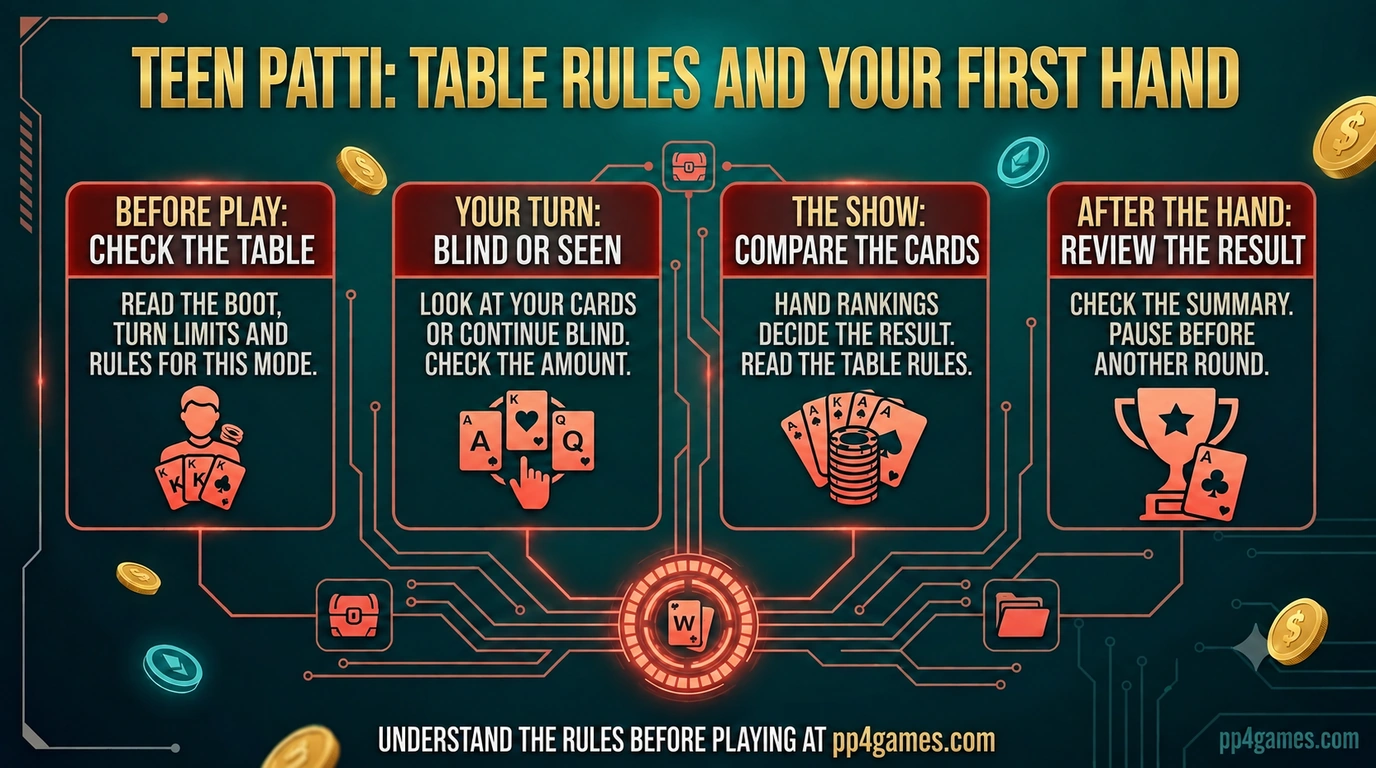
Familiar with Teen Patti at a family gathering? A mobile table may use different timers, contribution limits and show rules. This introduction explains the labels to read so you can follow a permitted practice round without confusing the controls.
Start with the Table Information
On a PP4 game screen, look for the rules attached to the particular table rather than relying on a general description. The boot is the opening contribution used to start a pot; it is not a cap on everything a hand can involve. Check how later contributions are calculated, how many seats are available and whether the mode uses practice credits or something else. Where monetary stakes are involved, first establish whether that activity is permitted for you. A higher table label is not a measure of experience or a reason to move up.
Follow the Order of a Hand
A typical Teen Patti hand deals three cards to each participating seat after the opening contribution. Playing blind means acting without looking at your cards; seen play begins after you view them. The contribution required for each can differ under the table rules. Pay attention to the action timer, the amount shown beside a control and the conditions for a show or sideshow. If a practice mode is offered, it is a useful place to recognise those controls without confusing them during a timed decision.
Separate Game Credits from Payment Records
A number beside a table may represent practice credits, an entry requirement or an account balance. Read the label and terms before interpreting it as money you can withdraw. This website does not confirm supported payment methods or verification requirements for a particular account. For an existing transaction, keep the reference and status from the service rather than assuming that a bank debit means the game balance has updated. Never send a UPI PIN, OTP or an identity document to a stranger offering to release funds.
Learn the Rules in the Mode You Open
Hand rankings, blind limits and show conditions are the details worth learning first. A trail, sequence and pair are different combinations, and the table’s help panel should explain their order and any local variation. Reading the cards well cannot guarantee a result because other hands and later decisions remain uncertain. Review our guidance on personal limits alongside the rules, particularly if quick rounds make it hard to notice time passing.
Three Details Beginners Often Overlook
- Treating the opening boot as the maximum commitment instead of checking later contributions and table limits.
- Assuming a promotional or practice balance has the same status as an available cash balance.
- Pressing a blind, seen or show control before reading its amount and the conditions displayed beside it.
Pehle rules samjho—understand the rules first. Take time to read the screen, use a permitted practice mode if available and leave the table when the controls or terms are unclear.